Hawai'i Volcanoes National Park Information Page

Welcome to the Hawai'i Volcanoes National Park Information Page.
Here you will find all you need to know about the natural history of the park.
Learn about the geology, trees, mammals, birds, or other plants and wildlife of the area.
-SPONSORED LINKS-
Hawai'i Volcanoes Lodging
Hawai'i Volcanoes Hotels
Hawai'i Volcanoes Maps
Hawai'i  Camping
Hawai'i Volcanoes Weather
Hawai'i Volcanoes Vacation Rentals
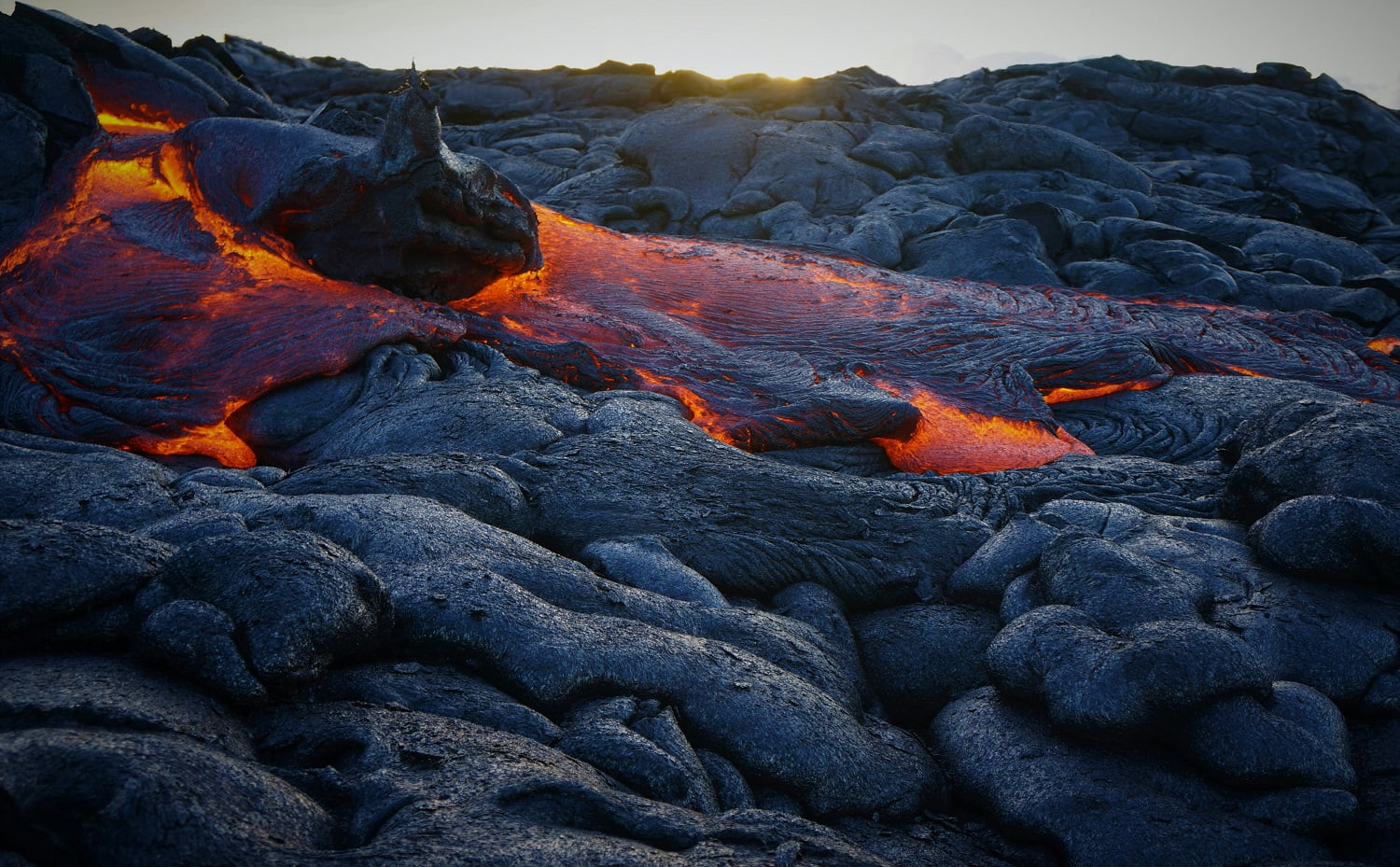
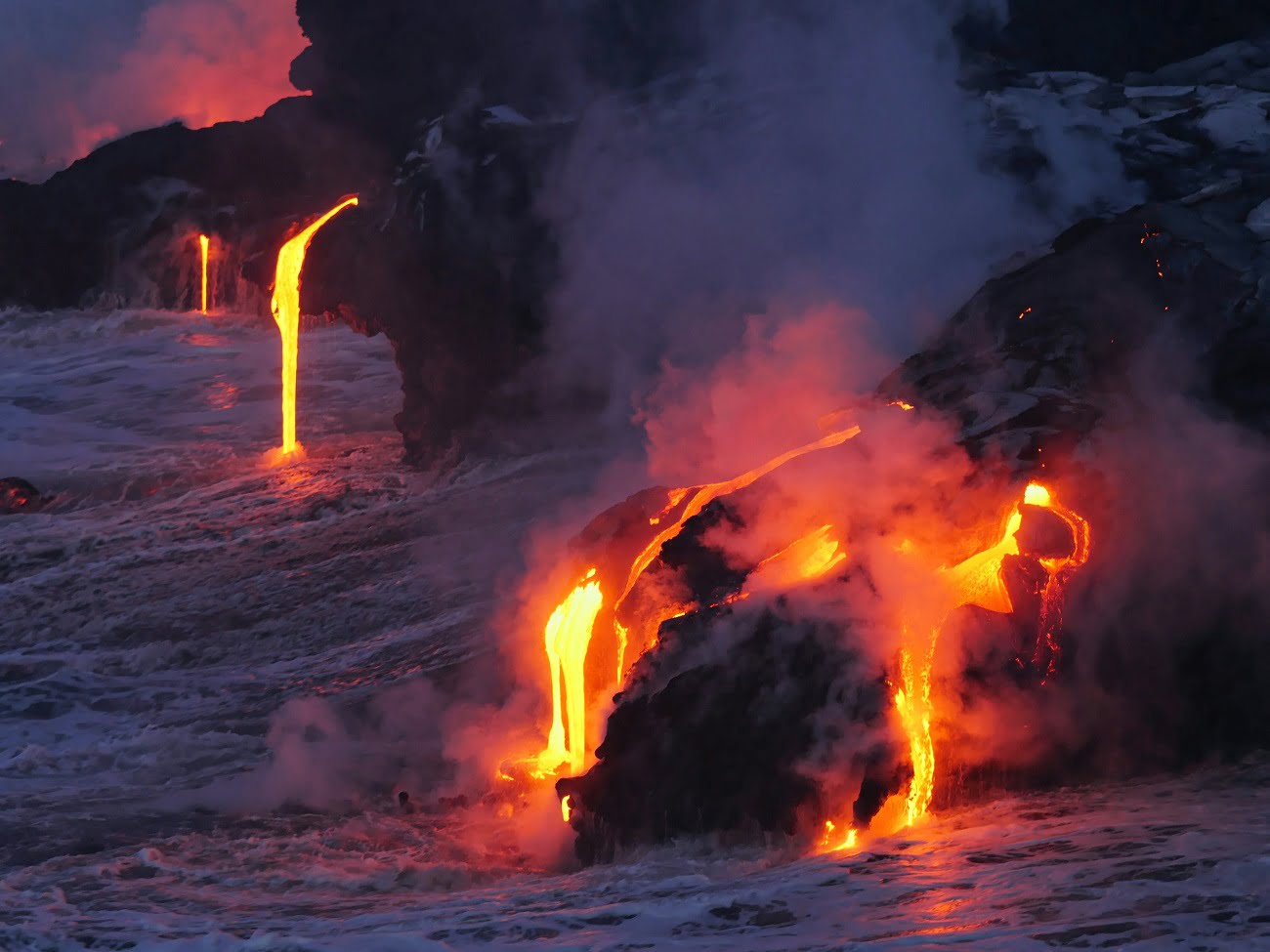
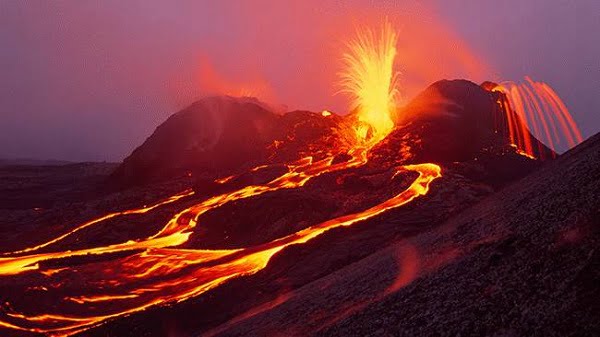
Lava

Sponsored National Park Search

Lava - Corel © Copyright

Hawai'i Volcanoes National Park Information

Establishment Kilauea Volcano Park History Pele
Pele and Kamapua'a People of the Island Size and Visitation Volcanoes


Establishment

Hawai'i Volcanoes National Park was established in 01 Aug 1916 as Hawai'i National Park, and on 22 Sep 1961, its name was changed to Hawai'i Volcanoes National Park. The Park displays the results of 70 million years of volcanism, migration, and evolution -- processes that thrust a bare land from the sea and clothed it with complex and unique ecosystems and a distinct human culture. The park encompasses 230,000 acres and ranges from sea level to the summit of the earth's most massive volcano, Mauna Loa at 13,677 feet. Kilauea, the world's most active volcano, offers scientists insights on the birth of the Hawai'ian Islands and visitors views of dramatic volcanic landscapes. Over half of the park is designated wilderness and provides unusual hiking and camping opportunities. In recognition of its outstanding natural values, Hawai'i Volcanoes National Park has been honored as an International Biosphere Reserve and a World Heritage Site.


Park History
by Dwight Hamilton

Because the eruptions of Hawai'ian volcanoes are gentler than those of most other volcanoes around the world, the edges of active vents are frequently accessible, allowing people to come pay their respects to Pele. The early Hawai'ians revered her and made offerings to placate her wrath. Missionaries William Ellis and Asa Thurston visited Kilauea's boiling lake of lava in 1823, the first Westerners to do so. Pele's fiery lake was described in magazines of the day, and adventuresome travelers came to see it firsthand. Mark Twain, on seeing Kilauea in 1866, enthusiastically wrote, "Here was room for the imagination to work!"

Lorrin Thurston, publisher of the Honolulu Pacific Commercial Advertiser at the turn of the century, loved to explore the volcano lands. Among his discoveries was a giant lava tube, formed when a river of hot lava cooled and crusted over and the still-molten interior continued to flow downhill. Eventually, the lava drained out, leaving a cave-like shell. The Thurston Lava Tube (Nahuku) is a major attraction on the Crater Rim Drive.

In 1906, Thurston began a campaign to make this amazing area into a public park. His efforts were not effective until he was joined in 1912 by Dr. Thomas A. Jaggar, who came to the islands to establish and serve as director of the Hawai'ian Volcano Observatory. Together, the two conservationists collared politicians, wrote editorials, and promoted the idea of making the volcanoes into a national park in what was then the territory of Hawai'i.

On August 1, 1916, President Woodrow Wilson signed the country's 13th national park into existence. It had taken 10 years, but the perseverance of Thurston and Jaggar paid off.

At first, the park consisted of only the summits of Kilauea and Mauna Loa on Hawai'i and Haleakala on Maui. Eventually, Kilauea Caldera was added to the park, followed by the forests of Mauna Loa, the Ka'u Desert (the site of ancient warrior footprints set in ash), the rain forest of Ola'a, and the Kalapana archaeological area of the Puna/Ka'u Historic District.

In 1961, Haleakala was made a separate national park. Today, Hawai'i Volcanoes National Park protects 377 square miles of the island's volcanic wonders and is a refuge for surviving native plants and animals.

In 1980, the United Nations Educational, Scientific, and Cultural organization (UNESCO) named Hawai'i Volcanoes National Park an International Biosphere Reserve because of its outstanding scenic and scientific values. The park was recognized for its important volcanic sites (including two of the world's most active volcanoes); its volcanic island ecosystem, which preserves one of the largest significant ecosystems on the Hawai'ian Islands; and its cultural and historic sites. The Biosphere Reserve program goals are to conserve the diversity of a designated site's ecosystems and provide areas and facilities for international ecological and environmental research, education and training.

Hawai'i Volcanoes National Park was named a World Heritage Site by UNESCO in 1982. World Heritage Sites recognize and protect areas around the globe that have outstanding natural, historical, and cultural values. It evolved from the idea that certain natural and cultural sites have "universal value" for all people.


Size and Visitation

Acreage - as of September 23, 2000

Federal Land - 207,643.38
Non-Federal Land - 2,052.00
Gross Area Acres - 209,695.38

Visitation - 1999

Total Recreation Visits - 1,502,855


Volcanoes

Volcanos are monuments to earth's origin, evidence that its primordial forces are still at work. During a volcanic eruption, we are reminded that our planet is an ever changing environment whose basic processes are beyond human control. As much as we have altered the face of the earth to suite our needs, we can only stand in awe before the power of an eruption.

Volcanoes are also prodigious land builders - they have created the Hawai'ian Island chain. Kilauea and mauna Loa, two of the world's most active volcanoes, are still adding land to the island of Hawai'i. Mauna Loa is the most massive mountain on the earth, occupying an area of 10,000 cubic miles. Measured from its base on the seafloor, it rises 30,000 feet, approximately 1,000 feet higher than Mount Everest. In contrast to the explosive continental volcanoes, the more fluid and less gaseous eruptions of Kilauea and Mauna Loa produce fiery fountains and rivers of molten lava. These flows, added layer upon layer, produced a barren volcanic landscape that served as a foundation for life. Hundreds of species of plant and animals found their way across the vast Pacific on wind, water, and the wings of birds. A few survived, adapted, and prospered during this time of isolation. The arrival of humans, first Polynesians, then Europeans, and the plants and animals that they brought with them drastically altered this evolutionary showcase, this grand experiment.

Today Hawai'i Volcanoes National Park displays the results of 70 million years of volcanism, migration, and evolution - processes that thrust a bare land from the sea and clothed it with complex and unique ecosystems and a distinct human culture. Created to preserve the natural setting of Kilauea and Mauna Loa, the park is also a refuge for the island's native plants and animals and a link to its human past. Park managers work to protect the resources and promote understanding and appreciation of the park by visitors. Research by scientists at the Hawai'ian Volcano Observatory has made Kilauea one of the best understood volcanoes in the world, shedding light on the birth of the Hawai'ian Islands and the beginning of planet Earth.

Volcanoes attest to the dynamic nature of the earth. Divided into rigid plates, the outermost layer of the earth drifts slowly over the more plastic mantle beneath. Most volcanic activity occurs along the edge of these plates, forming a "ring of fire." The series of volcanoes that include Washington's Mount Saint Helens, Alaska's Katmai, Japan's Mount Fuji, and the Philippines' Mount Pinatubo define the margins of the Pacific plate.

Why are there volcanoes in Hawai'i, which is located in the middle of the Pacific plate? Plumes of magma rise from a "hot spot" deep within the mantle. This fluid charged with gas, melts and pushes its way to the surface, erupting on the ocean floor to create a seamount. After several hundred thousand years and countless eruptions, the volcano rises above sea level to form an island. The volcano continues to grow until movement of the Pacific plate carries the island off the hot spot.

During the last 70 million years the Pacific plate has acted as a conveyor belt, moving the islands northwest off the hot spot at the rate of about four inches a year. The park's active volcanoes, Kilauea and Mauna Loa, continue the island building process that formed the 3,500 mile Emperor Seamount-Hawai'ian Island chain. But they are not the last; to the southeast, Lo'ihi seamount is rising from the ocean floor.


Kilauea Volcano in Hawai'i Volcanoes National Park

Who could have known that the fountains of fire that first lit up the night sky on January 3, 1983 would continue to burn with such intensity seventeen years later? The eruption of Kilauea Volcano in Hawai'i Volcanoes National Park continues today as the longest-lived rift activity in Hawai'ian volcano history. For island dwellers, a seventeen-year retrospective on the volcano as both creator and destroyer elicits a mixed emotional response.

Unstoppable in its march seaward, lava leaves few reminders of what was. The park has bid a fond aloha to its Waha`ula Visitor Center, as well as tens of thousands of archeological features, including temple sites, petroglyph fields, and village complexes. Kamoamoa Campground and stretches of Chain of Craters Road lie entombed beneath 80 feet of basalt. Every minute, another 130,000 gallons of molten rock gush from earthcracks on the volcano's flank, enough to pour a lava veneer over Washington, D.C.'s 63 square miles in just five days.

Hawai'i County civil defense administrators estimate the economic loss due to ongoing lava inundation tops $100 million. Unpredictable in their meandering, rivers of lava have consumed 181 homes, a Congregational Church, a community center, and a grid of power and phone lines. Lava has torched more than 16,000 acres of lowland and rain forest, home to rare hawks and honeycreepers, happyface spiders and hoary bats. Today, a visitor anticipating a dip at Kaimu blacksand beach must instead find satisfaction in a postcard view--lava has transformed the palm-fringed crescent bay into a pahoehoe plain.

Every day, the volcano spews more than 2,500 tons of sulfur dioxide into the atmosphere, enough noxious gas to fill 100 Goodyear blimps. USGS scientists at the Hawai'ian Volcano Observatory figure Kilauea's emissions are twice as bad as EPA's worst stationary point source polluter. Respirators with canisters designed to filter out hydrogen chloride, sulfur dioxide, and airborne glass particles are standard park ranger issue.

But wherever lava meets the sea, the island grows. In a creative process spanning 80 million years, this land born of the sea and forged by fire inspired Mark Twain to proclaim the Hawai'ian archipelago, "the loveliest fleet of islands that lies anchored in any ocean." Since 1983, more than 550 acres of new land have been added to the "Big Island". Hawai'i Volcanoes National Park grows without political fanfare and without congressional authorization.


People of the Islands

Superb voyagers, Polynesians from the Marquesas Islands migrated to Hawai'i over 1,600 years ago. Navigating by the sun and stars, reading the winds, currents, and the flight of seabirds, they sailed across 2,400 miles of open ocean in great double-hulled canoes. They brought along items essential to their survival: pua'a (pigs), ilio (dogs), and moa (chickens); the roots of kalo (taro) and �uala (sweet potato); and the seeds and saplings of niu (coconut), mai'a (banana), ko (sugar cane), and other edible and medicinal plants. They were well established on the islands when about 800 years ago, Polynesians from the Society Islands arrived in Hawai'i. Claiming descent from the greatest gods, they became the new rulers of Hawai'i. After a time voyaging back and forth contact with southern Polynesia ceased. During the 400 years of isolation that followed, a unique Hawai'ian culture developed.

Hawai'i was a highly stratified society with strictly maintained casted. The ali'i (chiefs) headed the social pyramid and ruled over the land. Highly regarded and sometimes feared, the kahuna (professionals) were expert on religious ritual or specialists in canoe-building, herbal medicine, or healing. The maka'ainana (commoners) farmed and fished; built walls, houses, and fishponds; and paid taxes to the king and his chiefs. Kauwa, the lowest class, were outcasts or slaves.

A system of laws known as kanawai enforced the social order. Certain people, places, things and times were sacred - they were kapu, or forbidden. Women ate apart from men and were not allowed to eat pork, coconuts, bananas, or a variety of other foods. Kapu regulated fishing, planting, and harvesting of other resources, thus ensuring their conservation. Any breaking of kapu disturbed the society of society; the punishment often was death.

Village life was rich and varied: Hawai'ians fished in coastal waters and collected shellfish, seaweed, and salt along the shore. They raised pigs, dogs, and chickens, and harvested sweet potatoes, taro, and other crops. Men pounded taro into poi, while women beat the inner bark of wauke (paper mulberry) into kapa. They worshiped akua (gods) and aumakua (guardian spirits) and chronicled their history through oli (chant), mele (song), and hula (dance). Over several hundred years the people of Hawai'i cultivated traditions that they passed on through generations. But the sound of taro pounding and kapa beating, rhythmical signatures of Hawai'ian village life, would fade away after Captain James Cook arrived in 1778 and introduced the rest of the world to Hawai'i.


Aia La o Pele - There is Pele
Hawai'ian English
No Kahiki mai ka wahine o Pele, The woman Pele comes from Kahiki,
Mai ka aina mai o Polapola, From the land of Polapola,
Mai ka punohu a Kane, From the rising mist of Kane,
Mai ke ao lapa I ka lani. From the clouds that move in the sky.

According to early Hawai'ian traditions, there was a time in the mysterious past when the air was surrounded with spiritual beings, and a thin veil divided the living from the dead, the natural from the supernatural. During that time Pele, goddess of the volcano, came to Hawai'i.

Having traveled for many miles in search of a suitable home for her fire and family, Pele settled in the crater of Halema'uma'u at the summit of Kilauea.

Pele is volcanism in all its forms. Her poetic name is Ka wahine 'ai honua, the woman who devours the land. When her molten body moves, the land trembles and the sky is afire with a crimson glow. Those present whisper in awe, "Ae aia la o Pele, there is Pele".

In her presence, our senses are awakened. We smell the sulfur. We feel the heat where the steam dances above the earthcracks at Wahine Kapu. Pele's tears hide in the cinder outfall at Pu'u Pua'i, her golden hair sparkles between the rope folds of pahoehoe lava. A play of sunlight on her ebony rock reveals a shimmering rainbow of color.

Hawai'i's native plants and animals, and prehistoric cultural relics add to the mystical feeling of her extraordinary lava landscape. Kupuna, respected Hawai'ian elders, teach malama o ka'ina, care for the land and the land will care for you. Today we can protect the integrity of the park and the culture of Hawai'i's indigenous people by leaving everything in its rightful place.

At Kilauea, where the very ground is sacred to the Hawai'ian people, remember to E nihi ka hele, walk softly!


Pele and Kamapua'a

Many Hawai'ian legends speak of the relationships between Pele and other gods and human. One story tells why Pele's home in Kilauea's summit caldera is called Halema'uma'u.

The hog-man, demi-god Kamapua'a of human, animal, fish and fern forms came to Kilauea to woo Pele She rejected his love and cried out at him, "A'ohe 'oe kanaka he pua'a, you are not a man, you are a pig."

He was insulted. And a furious battle ensued between them. Pele hurled fire and molten lava. Kamapua'a retaliated with storms of rain.

The battle raged and the two weakened as fire won, then rain, the fire. Desperate to escape, Kamapua'a turned himself into the "ama'u fern and surrounded the summit caldera." ama'u fern NPS Photo

Thus the name Halema'uma'u house surrounded by the 'ama'u fern. The fern's poetic name, pua'a 'ehu'ehu singed pig, refers to the new fronds' red color, a sign that Kamapua'a was burned by the last bits of Pele's fire.


Ohelo

Ohelo NPS Photo

To the Hawai'ian eye the ohelo is no mere plant. It is Pele's sister, Ka'ohelo, out of who bones spring the red-berried bush. Embodied in earthly and heavenly phenomena, Pele's 'ohana (family) is ever present in the volcano region. Another sister, Hi'iaka-i-ka-pua'ena'ena, is the rosy glow of dawn on clouds and mountains. Pele's brothers, Ka-moho-ali'i, Kane-hekili, and Ke-ua-ake-po are steam, thunder and rain of fire.


'Aumakua

Hawk NPS Photo

To some Hawai'ian families, 'io, the Hawai'ian hawk, is a sacred 'aumakua or ancestral spirit. What was human in life became upon death a guardian god possessing awesome power and loving concern. Ka 'io nui maka lana au moku, the great hawk with eyes that see everywhere on the land.

As both godly ancestors and spiritual parents, 'aumakua assumed myriad kino lau (body forms) of plant, animal or mineral. They brought warnings of coming misfortune and deliverance from immediate danger through dreams, visions and physical manifestations.

When pueo (owl) cried in a strange way, 'eu'eu, it was a sign to get away. When a canoe capsized in a storm, mano (shark) appeared and men rode to safety on its back.

At one with nature, Hawai'ians were at home in a world alive with spirit forces.


Hawaii Volcanoes National Park Links
Bullet Activity & Calendar Page
Bullet Address, Email & Phone Guide
Bullet Backcountry Camping
Bullet Brochures, Maps, Written Info
Bullet Camping Guide
Bullet Chat
Bullet Ecosystem
Bullet Eruption Updates
Bullet Establishment
Bullet Fees
Bullet Flora & Fauna
Bullet Hawksbill Turtle
Bullet Hiking Guide
Bullet Jobs, SCA, Volunteer Positions
Bullet Kilauea Cultural Festival
Bullet Kilauea Volcano
Bullet Location
Bullet Lodging Guide
Bullet Map Guide
Bullet Nene Goose
Bullet Park History
Bullet Park Information
Bullet Pele
Bullet Pele & Kamapua'a
Bullet People of the Islands
Bullet Pet Information
Bullet Petrel Seabird
Bullet Search
Bullet Sights Guide
Bullet Size & Visitation Info
Bullet Travel Guide
Bullet Visitors Guide
Bullet Volcanoes
Bullet Wild Pigs
Bullet Wild Rabbits
Bullet Weather

Hawai'i Volcanoes National Park
Hawaii National Parks
Back to National Parks
Equip yourself for your next National Park adventure by visiting our Outdoor Gear and Equipment Store


by John William Uhler

Copyright © 1995 - 2007 Hillclimb Media

Click Here to obtain Advertising Information on this Page

This site is in no way associated with the United States Government, the Department of the Interior or the National Park Service

Demand Media Network

Privacy Policy